The result that looked wrong
There are experimental results you want so badly that you have to force yourself not to believe them. And then there are results you never asked for, do not understand, and initially want to send back to the laboratory.
This was the second kind.
Insilico Medicine was already working on several pain programs, including NaV1.8 and neuroinflammatory targets. We had purchased a bundle of in vivo studies from a contract research organization, and the package contained more pain-model capacity than the active programs required. The marginal cost of running a few additional compounds was effectively zero.
That presented a dangerous little question: if the assays were already paid for, why test only the molecules that pain pharmacology said ought to work?
Our AI scientists and biologists searched outside the normal analgesic perimeter. They nominated compounds and targets that had not been developed for pain and that would ordinarily have been excluded from a pain study. They were not opioids. They were not conventional anti-inflammatory agents. There was no obvious textbook reason to expect them to suppress pain.
One of the controls was morphine. In a pain experiment, morphine is not merely another comparator. It is the old king: the standard that reminds everyone what powerful analgesia looks like. Usually, nothing experimental does better.
Then one molecule did.
In the original epidural experiment, a compound directed against an undisclosed protein—our internal Target Z—produced an analgesic effect that appeared stronger and more durable than morphine. The room did not erupt in celebration. It became quiet.
Was the dose wrong? The formulation? The randomization? Could sedation or motor impairment be masquerading as analgesia? Had a sample been switched or a file mislabeled? The result was too unexpected to trust and too important to ignore.
So we repeated the work.
That moment is where this story begins. But to understand why it matters, it helps to look backward—because the history of pain medicines is a history of extraordinary advances that repeatedly solve one problem by creating another.
Four thousand years of progress—and the same bargain
The pharmacological history of pain is one of humanity’s longest scientific narratives. An ancient Sumerian tablet described opium as the “joy plant.” For millennia, healers knew that the poppy could quiet suffering. They also learned, long before receptor pharmacology existed, that relief could come with dependence, intoxication, and death.
Powerful systemic relief—and the enduring liabilities of dependence and respiratory depression.
Isolation of an active principle helps launch modern pharmacology and reproducible dosing.
Ether transforms surgery; cocaine introduces local anesthesia and regional pain control.
Anti-inflammatory analgesia expands; prostaglandin biology explains both benefit and organ risk.
Antidepressants and anticonvulsants help subsets of neuropathic-pain patients, with tolerability trade-offs.
New mechanisms succeed, but in route-limited severe pain or disease-specific migraine.
Suzetrigine validates a new oral, peripheral, non-opioid class for moderate-to-severe acute pain.
A preclinical attempt to combine a novel central mechanism with oral dosing and brain penetration.
In the early nineteenth century, Friedrich Sertürner isolated morphine from opium and helped establish one of the foundations of modern pharmacology: identify the active principle, measure the dose, and turn a traditional preparation into a reproducible drug. Morphine transformed medicine. It also concentrated the poppy’s liabilities into a molecule potent enough to produce profound respiratory depression and dependence.
In 1846, ether anesthesia made public surgery without agony imaginable. In 1884, Carl Koller demonstrated cocaine as a local anesthetic for eye surgery, opening the path to regional anesthesia and, eventually, safer synthetic local anesthetics. These were civilizational advances—but anesthesia is not a practical answer to the patient who must live, work, think, and move with chronic pain every day.
Aspirin created another branch of the analgesic family tree. Felix Hoffmann synthesized acetylsalicylic acid in 1897; more than seven decades later, John Vane showed that aspirin-like drugs inhibit prostaglandin synthesis. The descendants of that insight—nonsteroidal anti-inflammatory drugs—remain indispensable for inflammatory and musculoskeletal pain. Yet the same prostaglandin biology that helps control inflammation also protects the stomach, kidneys, and cardiovascular system. The mechanism contains the compromise.
Paracetamol became a household medicine in the twentieth century. It is accessible, useful in multimodal care, and generally well tolerated at recommended doses, but its analgesic effect is modest or condition-dependent and overdose can cause fatal liver injury.
For neuropathic pain, medicine often borrowed rather than invented. Tricyclic antidepressants, serotonin–norepinephrine reuptake inhibitors, gabapentin, and pregabalin were developed from antidepressant or anticonvulsant biology and later repurposed. They help some patients, but many experience incomplete relief, dizziness, somnolence, edema, anticholinergic effects, or other tolerability problems. The drugs were not designed from the beginning around the biology of chronic pain.
There have been genuine mechanistic breakthroughs. Ziconotide, derived from a cone-snail peptide, proved that a powerful non-opioid analgesic could work through N-type calcium channels. But it must be delivered into the intrathecal space and carries serious neuropsychiatric risks. CGRP-targeted medicines created a new, mechanism-specific era for migraine. And in January 2025, the FDA approved suzetrigine, a first-in-class NaV1.8 inhibitor for moderate-to-severe acute pain—the first new class of pain medicine approved in the United States in more than two decades.
Progress is real. It is also fragmented. We have excellent regional anesthesia, but it is regional. We have effective anti-inflammatory drugs, but inflammation is not every pain state. We have strong opioids, but chronic exposure can be catastrophic. We have migraine-specific biology, but it does not solve neuropathic or postsurgical pain. We have a new peripheral sodium-channel drug for acute pain, while many centrally sensitized and chronic pain conditions remain underserved.
The extraordinary fact is not that drug discovery has failed. It is that pain has outlived every pharmaceutical revolution.
The impossible triangle of pain medicine
Pain is not one disease. Nociceptive pain warns us about tissue damage. Inflammatory pain recruits immune and vascular pathways. Neuropathic pain can emerge from damaged or hyperexcitable nerves. Nociplastic pain reflects altered processing without a simple ongoing injury. Many patients have mixtures of all four.
For a broadly useful analgesic, we want three things at once: strong efficacy, a clean safety profile, and convenient administration. Existing therapies usually deliver one or two. The third becomes the price.
| Class / mechanism | Where it can help | The compromise |
|---|---|---|
| Opioids | Severe acute, cancer, palliative | Dependence/OUD, respiratory depression, constipation, sedation |
| NSAIDs | Inflammatory and nociceptive | GI bleeding, kidney injury, cardiovascular risk; limited neuropathic efficacy |
| Acetaminophen | Mild pain; multimodal adjunct | Modest or condition-specific efficacy; overdose hepatotoxicity |
| Gabapentinoids | Some neuropathic pain | Incomplete response; dizziness, somnolence, edema; respiratory-risk interactions |
| SNRIs / TCAs | Some neuropathic pain | Nausea, sedation, anticholinergic or cardiovascular tolerability |
| Ziconotide / interventions | Selected severe or localized pain | Intrathecal/procedural route, monitoring, neuropsychiatric risk |
| NaV1.8 / suzetrigine | Peripheral moderate-to-severe acute pain | Important new class; chronic and centrally mediated breadth still to be established |
| Target Z / ISM9528 | Preclinical goal: acute + neuropathic | Oral, brain-penetrant, non-opioid profile; human efficacy and safety not yet established |
ISM9528 is a development candidate, not an approved analgesic. Its human benefit–risk profile remains to be tested.
Opioids can be highly effective for acute, postoperative, cancer, and palliative pain. But repeated exposure may bring tolerance, physical dependence, opioid-use disorder, constipation, sedation, and potentially fatal respiratory depression. They remain essential medicines; they are not a clean universal solution.
NSAIDs and related anti-inflammatory agents are valuable for inflammatory and nociceptive pain. Their usefulness can be limited by gastrointestinal bleeding, kidney injury, fluid retention, and cardiovascular risk—especially with higher doses, vulnerable patients, or long treatment courses. They also do not directly address many neuropathic mechanisms.
Acetaminophen or paracetamol is familiar, inexpensive, and useful as an adjunct. Yet efficacy can be modest, and the therapeutic familiarity sometimes obscures a serious fact: overdose can cause acute liver failure and death.
Gabapentinoids and antidepressants provide meaningful relief for subsets of patients with neuropathic pain, but response is far from universal. Dizziness, somnolence, edema, sexual or anticholinergic effects, and drug interactions often determine whether a patient can remain on therapy. The FDA also warns that gabapentinoids can cause serious breathing problems in patients with respiratory risk factors or when combined with central nervous system depressants.
Interventional therapies—local anesthetic blocks, neuromodulation, and intrathecal medicines such as ziconotide—can be transformative for selected patients. Their route of administration, procedure burden, monitoring requirements, or neuropsychiatric risks prevent them from becoming simple first-line oral solutions.
NaV1.8 inhibition is an important new non-opioid option. Suzetrigine validates a peripheral pain target and provides an oral treatment for moderate-to-severe acute pain. Its approval should be celebrated. It also sharpens the next question: can we discover additional mechanisms with different anatomical and disease coverage, including mechanisms relevant to the central nervous system and chronic sensitization?
Target Z is our attempt to open that new biological territory. ISM9528 was designed to be oral, brain-penetrant, non-opioid, and mechanistically distinct. Those are design properties and preclinical findings—not yet proof of clinical efficacy or safety. But they define the profile we believe pain medicine needs.
The need is enormous. In 2023, 24.3% of US adults reported chronic pain and 8.5% reported high-impact chronic pain that limited life or work activities. Low back pain alone affected an estimated 619 million people worldwide in 2020 and remains the leading cause of disability globally. A market estimate can measure revenue. It cannot measure the night a patient cannot sleep, the job they can no longer perform, or the years of mobility lost to fear of the next movement.
This is why a strange result in a prepaid assay deserved to become a serious drug-discovery program.
Serendipity had a purchase order
The word serendipity can make a discovery sound accidental. Drug discovery certainly has its famous accidents: Fleming’s contaminated Petri dish led to penicillin; unexpected observations redirected sildenafil; clinical side effects revealed new uses for minoxidil. But luck alone produces anecdotes, not medicines.
In our case, serendipity had a purchase order.
The CRO bundle created spare capacity. AI and human judgment decided what to do with it. Instead of asking, “Which analgesic compound should enter the pain model?”, the team asked, “Across the biological and chemical space we can access, which unexpected perturbation would teach us the most if the conventional prior is wrong?”
Traditional drug discovery often tries to maximize the chance that each individual experiment succeeds. When experiments are expensive, that is rational. It can also create a conservative funnel: known pain target, familiar chemical matter, familiar model, expected signal. Cheap marginal capacity changes the mathematics. Some assays can be allocated to low-prior, high-information hypotheses.
This is where AI is unusually valuable. It can search weak signals distributed across omics, cell-type expression, human genetics, scientific literature, pathway relationships, chemical annotations, clinical data, and prior experiments. A human expert may dismiss any one clue as insufficient. A multimodal system can recognize convergence among many individually weak clues and elevate the hypothesis for human review.
The team did not test randomly. It used AI to make a more intelligent kind of scientific bet.
AI did not eliminate luck. It manufactured the conditions in which luck could be noticed.
Better than morphine—and therefore harder to believe
The original epidural result was dramatic. That made it scientifically dangerous.
A good laboratory does not fall in love with a beautiful outlier. It tries to kill it.
The team repeated the experiment, scrutinized dosing and handling, evaluated alternative explanations, and asked whether the phenotype belonged to Target Z or to some accidental property of the original compound. Could the effect be nonspecific? Could it reflect impaired movement rather than analgesia? Could another pharmacological activity be responsible?
The more consequential the claim, the more aggressively it must be attacked. The opposite of serendipity is not planning. It is validation.
As confirmatory data accumulated, our scientists used PandaOmics, Insilico’s AI platform for disease modeling and target prioritization, to reconstruct the biological neighborhood around Target Z. The system integrates omics data, publications, clinical-trial information, genetics, pathways, and other multimodal evidence. The analysis pointed to a pain-relevant pattern that had not previously been assembled into a development program.
Target Z was expressed in pain-relevant cell types. Human genetic evidence supported the relationship. Cross-species and disease-model data supplied additional context. None of these signals alone would have been enough. Together, they gave us a plausible bridge between the unexpected pharmacology and a real biological mechanism.
But computational evidence—even very good computational evidence—cannot establish causality.
So we made the knockout mice.
The knockout that changed the question
Target Z knockout animals were more resistant to pain. That result strengthened the case that the pharmacological phenotype belonged to the target rather than to an accidental off-target property of the original molecule.
The question inside the program changed almost overnight.
We were no longer asking, “Why did this strange compound produce a strange result?”
We were asking, “How do we build the best possible drug against this newly validated pain target?”
That transition—from anomaly to mechanism—is the intellectual center of the story. Serendipity gave us the signal. It did not give us the drug.
The first molecule was a scout. It had crossed an unexpected biological border and returned with evidence that the territory existed. A development candidate would need to be an entirely different kind of object: potent, selective, orally available, sufficiently exposed, metabolically stable, rapid, durable, brain-penetrant, manufacturable, patentable, and clean across a large safety battery.
Anyone can optimize one number. Drug discovery begins when improving one number makes three others worse.
MMMO: designing a molecule that could survive itself
I use the term massive, maximal multiparameter optimization, or MMMO, to describe the real problem of medicinal chemistry. A development candidate is not the molecule with the highest potency. It is the molecule that survives the collisions among potency, selectivity, permeability, solubility, exposure, metabolism, synthetic feasibility, intellectual property, and safety.
Think of it less like designing the fastest engine and more like building a Formula One car that must be fast, stable, fuel-efficient, compliant with the rules, repairable, and safe enough to finish the race. Winning one specification while failing another does not produce a slightly worse drug. It produces no drug.
A chemical modification that improves Target Z potency may reduce solubility. Better blood–brain barrier penetration may increase nonspecific binding or central safety risk. Longer exposure may create accumulation. Increasing polarity may rescue solubility while destroying permeability. Removing a metabolic soft spot may create an interaction with a cardiac ion channel. Every promising structure carries a hidden invoice.
The Abu Dhabi and Hong Kong teams used Chemistry42, our generative chemistry platform, together with medicinal-chemistry judgment, structural analysis, synthesis, and experimental feedback. Chemistry42 generated and scored novel structures against multiple objectives. Human chemists judged which trade-offs were plausible, synthetically practical, patentable, and worth the cost of making. Laboratory data then became the constraints for the next cycle.
AI generation → human selection → synthesis → biochemical and cellular testing → ADME and safety profiling → in vivo pharmacology → new constraints → another generation.
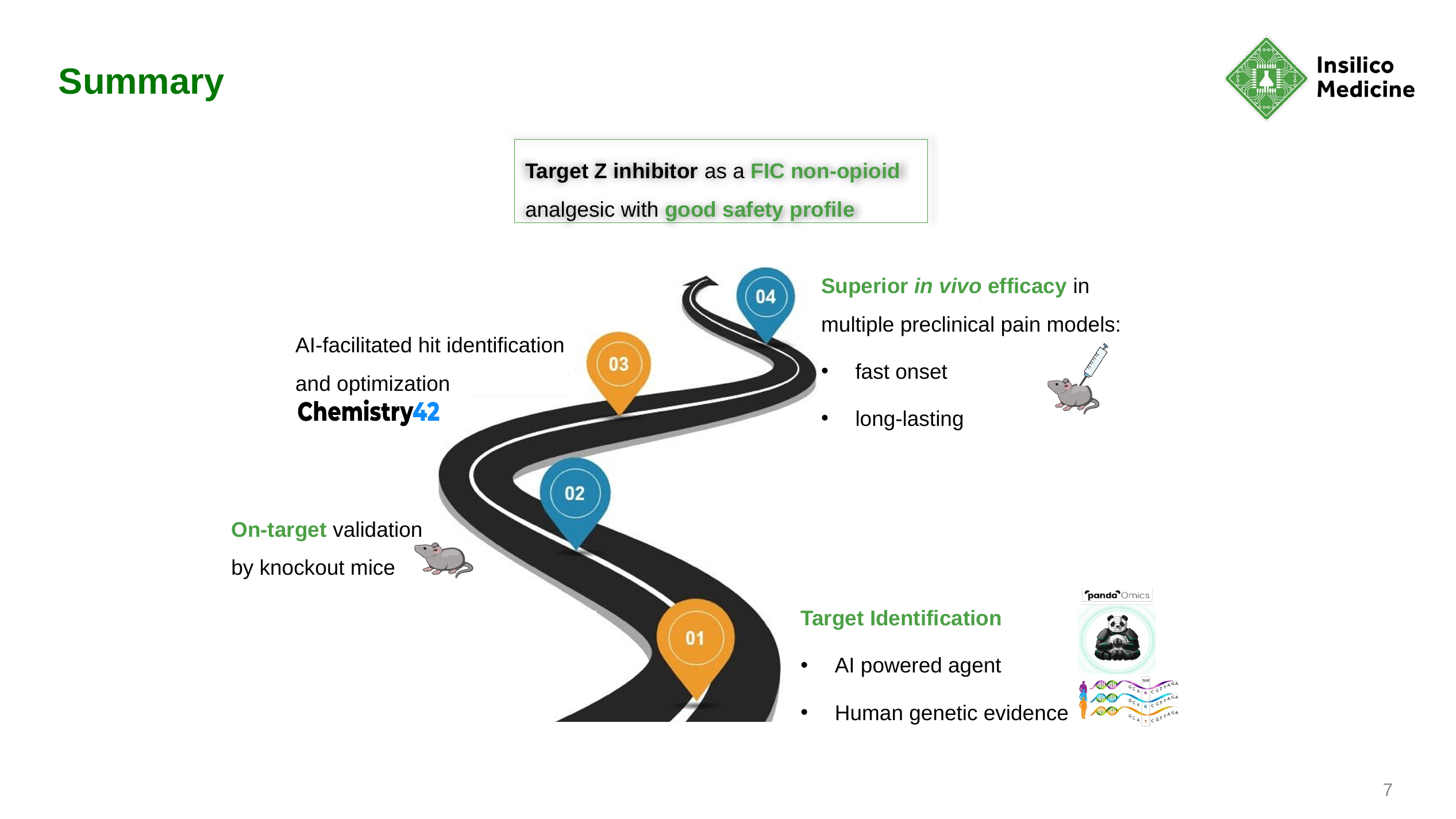
This is not “press a button and receive a drug.” It is a closed learning system in which algorithms can explore more possibilities and scientists can ask better questions of each experimental cycle.
Within roughly one year of the mechanistic breakthrough, the program produced ISM9528: a structurally novel, oral, brain-penetrant inhibitor of Target Z. It became Insilico’s 31st nominated preclinical candidate since 2021 and the second candidate driven by our Abu Dhabi R&D team.
One year is fast. The right way to understand that speed is not that the experiments were skipped. It is that decisions were compressed: wider hypothesis search, faster design cycles, earlier elimination of weak structures, and continuous integration of computational and experimental evidence.
What the preclinical evidence actually says
The most important discipline in communicating a discovery is to distinguish the extraordinary first observation from the evidence supporting the final candidate.
The original Target Z compound supplied the morphine-surpassing epidural surprise. ISM9528 is a newly designed oral molecule. The two are connected by target and program, not by an interchangeable experiment.
In a rat spinal nerve ligation model of neuropathic pain, oral ISM9528 produced a dose-dependent reversal of mechanical allodynia. The middle dose produced statistically significant analgesia across measured time points through six hours and was comparable to pregabalin at a similar dose level.
In a rat plantar-incision model of postsurgical acute pain, oral ISM9528 again showed a dose-dependent response. At 0.5 hours, it produced rapid analgesia that outperformed the equivalent pregabalin dose in the supplied experiment. In a separate intravenous plantar-incision experiment, a Target Z inhibitor showed longer-lasting activity than morphine.
The distinctions of route, molecule, model, and comparator matter. The program does not rest on one cinematic morphine comparison. It rests on convergence: repeat pharmacology, multiple pain models, dose response, rapid oral activity, duration, pain-relevant expression, human genetic support, knockout validation, and a chemistry series built for development.
The candidate’s early in vitro profile included high potency and permeability, hERG activity above 10 micromolar, a negative Mini-Ames result, low cytotoxicity risk in the HEK293 CTG assay, and a clean Safety44 panel. Pharmacokinetic studies showed moderate clearance and moderate-to-high bioavailability across preclinical species.
In 28-day dose-range-finding studies, the estimated no-observed-adverse-effect level corresponded to an approximately 41.5-fold exposure margin in rats and 57.5-fold in dogs, according to the supplied program summary.
GLP toxicology studies are scheduled to begin in October 2026. If the IND-enabling package supports the current profile, the team plans to advance ISM9528 toward clinical trials in 2027.
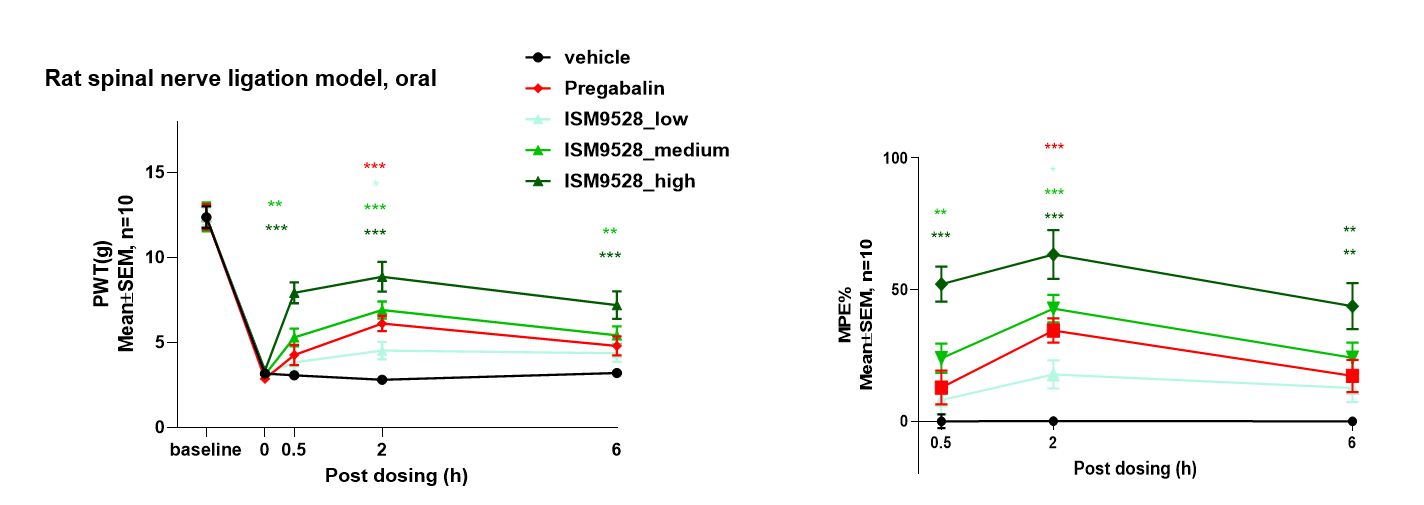
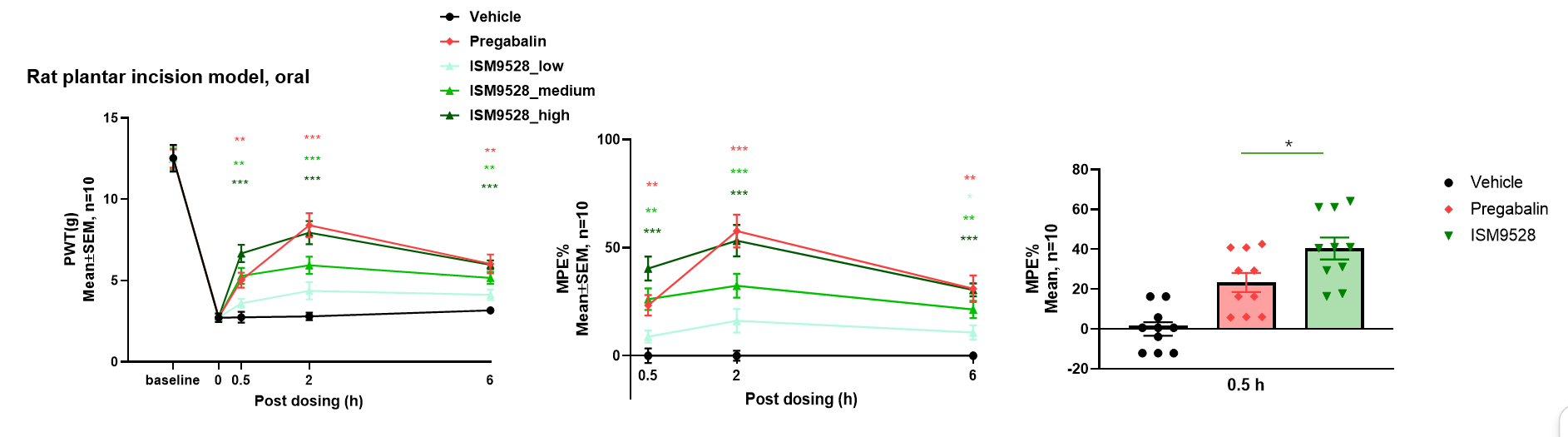
These are preclinical data. They do not establish that ISM9528 is safe or effective in people. But a molecule reaches the development-candidate threshold only when the integrated profile is strong enough to justify answering that question in the formal IND-enabling and clinical process.
Abu Dhabi, Hong Kong, and a laboratory without borders
Breakthroughs are often narrated as if they happened in one room. Modern drug discovery is closer to a distributed nervous system.
The original target-identification and molecular-design work was led by our teams in Abu Dhabi and Hong Kong, while specialized experiments were performed around the world. Computational scientists, medicinal chemists, translational biologists, pharmacologists, DMPK specialists, toxicologists, project leaders, and external research partners each carried a different part of the chain.
We established the Abu Dhabi R&D center in January 2023 with the strategic support of the Abu Dhabi Investment Office. Located in Masdar City at the IRENA headquarters, it became part of Abu Dhabi’s Health, Endurance, Longevity and Medicine ecosystem. The center now includes approximately 40 specialists working across Pharma.AI, aging research, sustainable chemistry, and drug discovery, with research relationships involving MBZUAI, Khalifa University, and NYU Abu Dhabi.
Our first candidate fully discovered by the UAE team, ISM0387, showed that a small AI-native group in Abu Dhabi could execute an end-to-end program. ISM9528 goes further. It did not begin as a new molecule against an established pain target. It began as an unexpected phenotype, became a new target hypothesis, survived causal validation, and generated a new chemical series.
Hong Kong supplied complementary biological, computational, chemistry, and corporate infrastructure. The global network supplied specialized experiments at the moment they were needed. A platform that works only while its original inventors are sitting beside every experiment is not a platform. It is artisanal knowledge wearing a software interface. Target Z is evidence that our system and culture can travel.
This matters to me beyond the program itself. The UAE and Hong Kong can originate frontier biomedical innovation—not merely finance it, license it, or manufacture it after discovery elsewhere.
Could this be a first in human–AI drug discovery?
Science should be cautious with the word “first.” Many medicines were born from serendipity. Many targets were revealed by phenotypic screening. AI is already used in target discovery, molecule design, clinical analysis, and repurposing.
What appears unusual here is the complete chain:
- AI-assisted analysis and human judgment selected a molecule not intended for pain for an opportunistic in vivo experiment.
- That molecule unexpectedly outperformed morphine in the original epidural study.
- Multimodal AI helped connect the phenotype to a previously underexplored pain mechanism and Target Z.
- Expression data, human genetics, repeat pharmacology, and knockout animals strengthened causal confidence.
- Generative chemistry and medicinal chemists created a novel, oral, brain-penetrant series optimized simultaneously for efficacy, pharmacokinetics, and safety.
- The program reached a nominated development candidate roughly one year after the mechanistic breakthrough.
To the best of our knowledge, this may be the first documented case in which an AI-enabled, deliberately unconventional cross-indication experiment revealed a new pain mechanism and was then converted by an end-to-end human–AI workflow into a novel oral development candidate.
The scientifically important word is not first. It is reproducible.
If this were merely a lucky hit, it would be a wonderful company story. If a platform can repeatedly create the conditions for high-information surprises, distinguish signal from artifact, and turn the surviving biology into development-grade molecules, it becomes a new model for pharmaceutical research.
What AI did—and what only people could do
Every AI discovery is eventually forced into one of two bad stories. In the first, AI invents a drug autonomously while scientists watch. In the second, AI is dismissed as a statistical accessory and the work is described as conventional discovery with better software.
Neither is accurate.
AI expanded the field of view. It helped integrate more evidence than an individual scientist could read, prioritized an unconventional experiment, mapped Target Z to pain-relevant biology, and allowed chemists to explore molecular designs under many simultaneous constraints.
People created the opportunity. They decided to spend an assay on a low-prior idea. They distrusted the first result appropriately, designed the controls, generated the knockout model, interpreted ambiguity, set the candidate profile, rejected chemically implausible suggestions, and made every development decision.
The CRO delivered standardized experiments. Animals supplied causal and systems-level evidence no computer model can yet replace. The organization supplied something equally rare: permission to pursue a result that did not belong to the plan.
AI expands the anomalies we can notice. Human judgment and experimental validation decide which anomalies become knowledge.
That is how I think about pharmaceutical superintelligence. It will not be a chatbot that answers every drug-discovery question. It will be a coordinated human–machine–laboratory network that generates non-obvious hypotheses, assigns experiments by information value, learns from both negative and positive data, and continuously improves its ability to convert biology into medicine.
The option value of the experiment nobody needed
Most organizations optimize away spare capacity. An unused assay is recorded as waste. In this program, unused capacity became option value.
The additional pain studies were already included in a broader CRO arrangement. The marginal financial cost of testing unconventional compounds was close to zero. Yet one of those experiments opened a potential first-in-class program in a disease area affecting hundreds of millions of people.
This is not an argument for testing random compounds. It is an argument for deliberately allocating cheap experimental capacity to high-novelty, high-information hypotheses. AI can rank those hypotheses not only by the probability of success, but by the value of what we would learn if the conventional prior is wrong.
Pharmaceutical research is full of discontinued molecules, unexplained phenotypes, negative results, disconnected datasets, and assays with residual capacity. Somewhere in that negative space are mechanisms we have trained ourselves not to see.
Serendipity may find the door. A platform is what keeps walking through it.
One step from the clinic—and still a long way from a medicine
Development-candidate nomination is a major threshold. It means the discovery team has selected the molecule around which formulation, manufacturing, GLP toxicology, regulatory documentation, and first-in-human planning can be organized. It is the end of discovery and the beginning of development.
It is not clinical proof.
Pain models are useful but imperfect, and many compelling mechanisms in rodents fail to translate to patients. Brain penetration is an opportunity and a responsibility. Chronic dosing imposes a different safety standard from a brief course for acute pain. First-in-human studies must establish exposure, pharmacokinetics, tolerability, and—where possible—evidence that the intended biology is engaged.
But every new class must reach this boundary before human translation can begin. ISM9528 has reached it with a deliberately designed combination: a non-opioid mechanism, oral administration, blood–brain barrier penetration, rapid and durable activity across preclinical models, broad early safety screening, and substantial estimated exposure margins in 28-day dose-range-finding studies.
Now biology gets the final vote.
Why this discovery matters to me
I founded Insilico with the belief that aging and disease could be decoded using AI—and that the honest way to test an AI platform was not with attractive benchmarks, but by discovering real targets, generating real molecules, and forcing them through real experiments.
Pain is inseparable from healthy longevity. People do not experience extra years as a survival curve. They experience them through movement, sleep, independence, cognition, work, and the ability to engage with the people they love. Chronic pain erodes all of these. A longer life lived inside persistent pain is not the future we are trying to build.
Target Z may succeed or fail in humans; the clinic reserves that decision. But the program has already changed how I think about discovery.
AI did not remove serendipity. It made serendipity searchable.
Human scientists did not become less important. They became capable of examining a wider, stranger, and more valuable hypothesis space.
And a “free” experiment was not free at all. It was paid for by years of platform development, accumulated data, medicinal chemistry, experimental infrastructure, team experience, and a scientific culture willing to investigate an impossible result.
The molecule was not supposed to work.
That was precisely why it was worth understanding.
To every scientist sitting on spare assay capacity and a heretical idea: run the experiment.
Sources and further reading
- Insilico Medicine: https://insilico.com/
- PandaOmics target-discovery platform: https://insilico.com/pandaomics
- Chemistry42 generative-chemistry platform: https://insilico.com/chemistry42
- Insilico’s Abu Dhabi R&D milestone and UAE ecosystem: https://insilico.com/news/yxenmllx01-generative-ai-leap-insilico-medicine-nom
- Morphine isolation and the emergence of modern pharmacology: https://pubmed.ncbi.nlm.nih.gov/10764185/
- Carl Koller and the first clinical use of cocaine as a local anesthetic: https://pubmed.ncbi.nlm.nih.gov/22531385/
- The history of aspirin: https://pubmed.ncbi.nlm.nih.gov/30391545/
- John Vane’s prostaglandin mechanism for aspirin-like drugs: https://pubmed.ncbi.nlm.nih.gov/5284360/
- The clinical history of paracetamol: https://pubmed.ncbi.nlm.nih.gov/11319582/
- FDA acetaminophen safety information: https://www.fda.gov/drugs/safe-use-over-counter-pain-relievers-and-fever-reducers/acetaminophen
- FDA warning on serious breathing problems with gabapentinoids: https://www.fda.gov/safety/medical-product-safety-information/neurontin-gralise-horizant-gabapentin-and-lyrica-lyrica-cr-pregabalin-drug-safety-communication
- FDA prescribing information for intrathecal ziconotide: https://www.accessdata.fda.gov/drugsatfda_docs/label/2023/021060s012lbl.pdf
- FDA approval of suzetrigine, a first-in-class NaV1.8 inhibitor for acute pain: https://www.fda.gov/news-events/press-announcements/fda-approves-novel-non-opioid-treatment-moderate-severe-acute-pain
- CDC: chronic pain and high-impact chronic pain among US adults, 2023: https://www.cdc.gov/nchs/products/databriefs/db518.htm
- WHO low-back-pain fact sheet: https://www.who.int/news-room/fact-sheets/detail/low-back-pain
Data note. Quantitative candidate, efficacy, pharmacokinetic, and safety statements are based on the Insilico Medicine Target Z / ISM9528 program materials supplied for this article, including the June 2026 preclinical summary. Target Z remains undisclosed. All efficacy and safety findings described here are preclinical unless explicitly stated otherwise.